
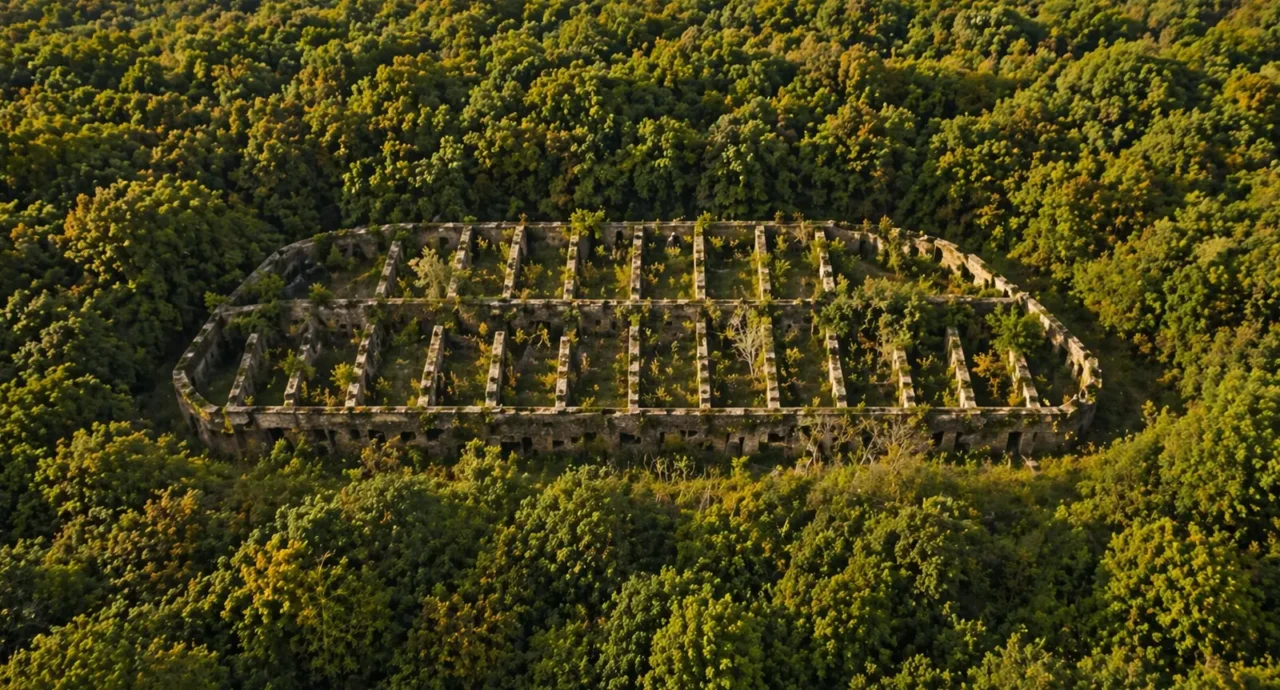
One of Ukraine’s most unusual historical landmarks, Tarakaniv Fort, may soon be closed to visitors following a partial collapse that has raised serious safety concerns.
Authorities in the Rivne region have called for urgent restrictions on access to the site, requesting that the Ministry of Defence of Ukraine, which owns the fort, immediately suspend visits and begin emergency stabilization works.
At the same time, regional officials have appealed to the Ministry of Culture of Ukraine to include the fort in the State Register of Immovable Monuments, a step that could strengthen its protection and support future restoration efforts.
Safety concerns after structural damage
The move follows a recent collapse of part of the fort’s stone structure, highlighting the deteriorating condition of the site, which has been in a fragile state for several years.
Officials say that decisions regarding the long-term conservation and future use of the fort will depend on government action, with restoration and preservation strategies still under discussion.
Currently, the site remains under the management of a military housing department linked to Ukraine’s armed forces, as part of a larger military complex.
A unique fortress with military history
Built in the late 19th century by the Russian Empire, Tarakaniv Fort was designed to protect the strategic Lviv–Kyiv railway line. Its large structure reflects the advanced military engineering of the time.
The fort is constructed in a diamond shape, with sides measuring up to 240 metres, and is surrounded by deep moats and reinforced earthworks. At its centre stands a two-storey barracks connected by underground tunnels, which once housed troops, supplies and command facilities.
The complex includes more than 100 defensive casemates and was capable of accommodating up to 800 soldiers, making it a significant military installation during its operational period.
A popular but vulnerable tourist attraction
In recent years, the abandoned fortress has become a popular destination for explorers and tourists drawn to its atmospheric ruins and labyrinth-like tunnels.
However, the lack of maintenance and ongoing structural decay has increased risks for visitors, prompting renewed calls for intervention.
Preservation vs access
The potential closure reflects a broader challenge faced by many historical sites: balancing public access with safety and preservation.
If approved, the emergency measures could mark the first step toward a more structured conservation effort, ensuring that Tarakaniv Fort can be protected for future generations.
For now, authorities are urging caution, signaling that access restrictions may be introduced soon as safety takes priority over tourism.