Each time the U.S. Department of Justice publishes another batch of Jeffrey Epstein-related files, the same pattern repeats – the public rushes to scan for famous names, and the internet turns fragments of correspondence into instant headlines. But the latest materials are drawing attention for a different reason: the appearance of Ukraine, repeatedly and in unexpectedly varied contexts.
The documents do not present a single unified narrative. Instead, they read like what they often are – scanned emails, contact lists, legal notes, and working correspondence connected to Epstein’s orbit. Still, the frequency and specificity of Ukraine-related references has become difficult to ignore.
A request tied to Trump’s inauguration and a Ukrainian official
Among the Ukrainian figures mentioned in the newest DOJ materials is Oleksandr Vilkul, the incumbent head of the Kryvyi Rih Defense Council.
One scanned email dated 2016 describes a request for assistance in obtaining an invitation to Donald Trump’s inauguration – specifically for Vilkul. The author of the letter (whose name is not disclosed in the material) claims the request came through a woman from Ukraine who allegedly worked for Vilkul. According to the message, she offered a reward in exchange for help securing access.
The detail matters because it places Vilkul’s name inside a very specific political moment in the United States – and within the broader universe of people attempting to leverage influence around Epstein’s network.
In January 2017, Vilkul appeared on social media and in Ukrainian TV and radio appearances with statements that he had attended events in the United States “on a business trip” and “by invitation of partners.” The DOJ material, however, adds a new layer of context: the possibility that at least one element of that trip involved third-party lobbying tied to Epstein’s correspondence archive.
The same documents still orbit Trump, Prince Andrew – and now Ukraine’s political past
Predictably, the most attention in the newly surfaced materials still centers on Donald Trump, whose name continues to appear as one of the most prominent references across releases.
They also include mentions of Prince Andrew, the British royal whose association with Epstein has long been part of the international story.
But what stands out in this particular batch is how Ukraine’s political history also surfaces in the same ecosystem.
Leonid Kuchma is mentioned in the documents as well – described as a client in matters linked to the Melnychenko tapes and the investigation into the murder of journalist Georgiy Gongadze. The inclusion of Kuchma’s name underscores how wide the “Epstein materials” reach – extending beyond celebrity culture and into the most sensitive chapters of post-Soviet political life.
A lawyer reference and the suggestion of a broader legal network
Another name appearing in the materials is Daga Sheen, described in the context of legal support. According to the lawyer’s reference, Sheen was hired to assist the president’s family in legal matters in the early 2000s.
This is not presented as a criminal allegation. But it demonstrates the way Epstein-related documentation often functions: a sprawling record of intermediaries, legal professionals, and political operators – many of whom appear only as peripheral mentions, yet still signal the breadth of Epstein’s contact environment.
Ukraine and the modeling industry: Linea 12, Masha Manyuk, and Jean-Luc Brunel
A separate thread in the materials touches the Ukrainian modeling industry – an area that has long been associated with investigative reporting into Epstein’s recruitment pipeline.
The DOJ materials reference the Linea 12 modeling agency, led by Masha Manyuk.
In Epstein’s correspondence, there is also mention of contact involving Jean-Luc Brunel – a French modeling agent who was later charged with rapes and sexual assaults. Brunel died in 2022 while in custody in France.
This part of the archive is especially sensitive, because it intersects with the best-documented allegations in the Epstein case: recruitment, exploitation, and trafficking structures that used modeling and “talent” networks as cover.
The Lviv references: real estate, bank accounts, and a paper trail question
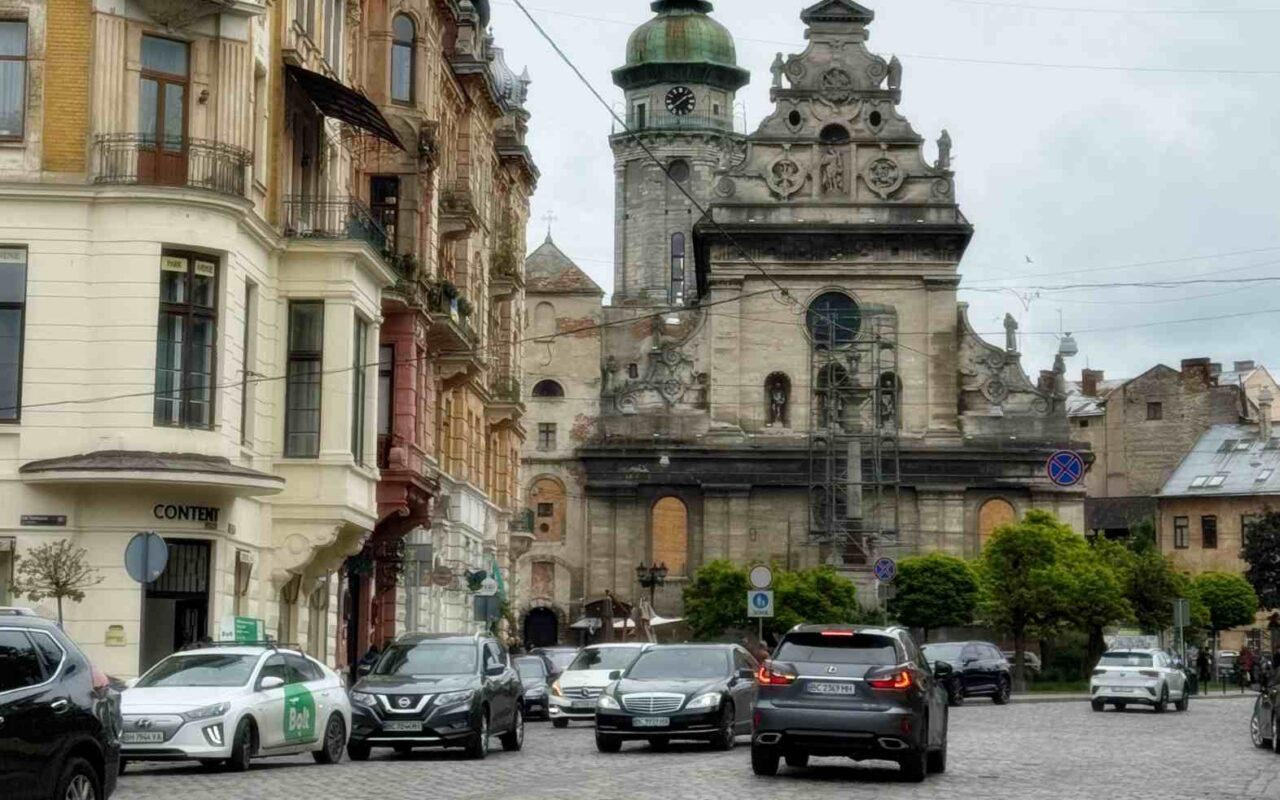
Perhaps the most surprising element of the Ukraine-related mentions is the scale of references to Lviv.
According to the Epsfilesnexus Ukraine project, Ukraine appears at least 72 times in the broader Epstein materials, while Lviv appears more than 105 times.
One building referenced is located on Vulytsia Borysa Romanytskoho, in Kastelivka – a quiet, elite neighborhood of Lviv. The building described (No. 24) is a relatively large two-story structure, though reportedly in neglected condition.
However, investigators emphasize a key point: there is no evidence that Epstein planned to buy property in Lviv. According to the reporting summarized in the materials, any “interest” in a villa or nearby buildings may have been purely instrumental – a way to obtain documents needed for financial reporting, rather than an actual investment plan.
If accurate, it would align with a known tactic in financial maneuvering: using real estate references as paperwork anchors for transactions that ultimately have nothing to do with physical property ownership.
Intermediaries and the name of a Lviv-linked graduate
The Lviv mentions also appear through intermediaries.
One of the names appearing in the materials is Anastasia Siro, described as a graduate of Ivan Franko National University of Lviv who later studied at Columbia University. Her name is also listed on the website of the General Council of the Ukrainian Museum in North America.
This does not indicate wrongdoing. But it reinforces the same pattern that runs throughout Epstein-related document releases: the appearance of legitimate institutions, professionals, and public figures in a dataset where inclusion often reflects proximity, communication, or legal documentation – not criminal activity.
What these mentions do – and do not – prove
The most important context is also the simplest.
The presence of a person’s name in DOJ-released Epstein materials is not proof of a crime.
Many of the documents are:
- working notes
- contact lists
- correspondence between lawyers, lobbyists, assistants, and intermediaries
- scanned emails with partial context
In some cases, names appear because someone tried to use them for influence. In others, they appear because a third party referenced them in legal strategy or financial paperwork. And in many cases, the people named may have had no direct involvement at all.
Still, the Ukraine-related references – from Kryvyi Rih politics to Lviv real estate, from modeling agencies to legacy political figures – demonstrate that Epstein’s documentary footprint continues to expand in directions that are both international and politically complex.