
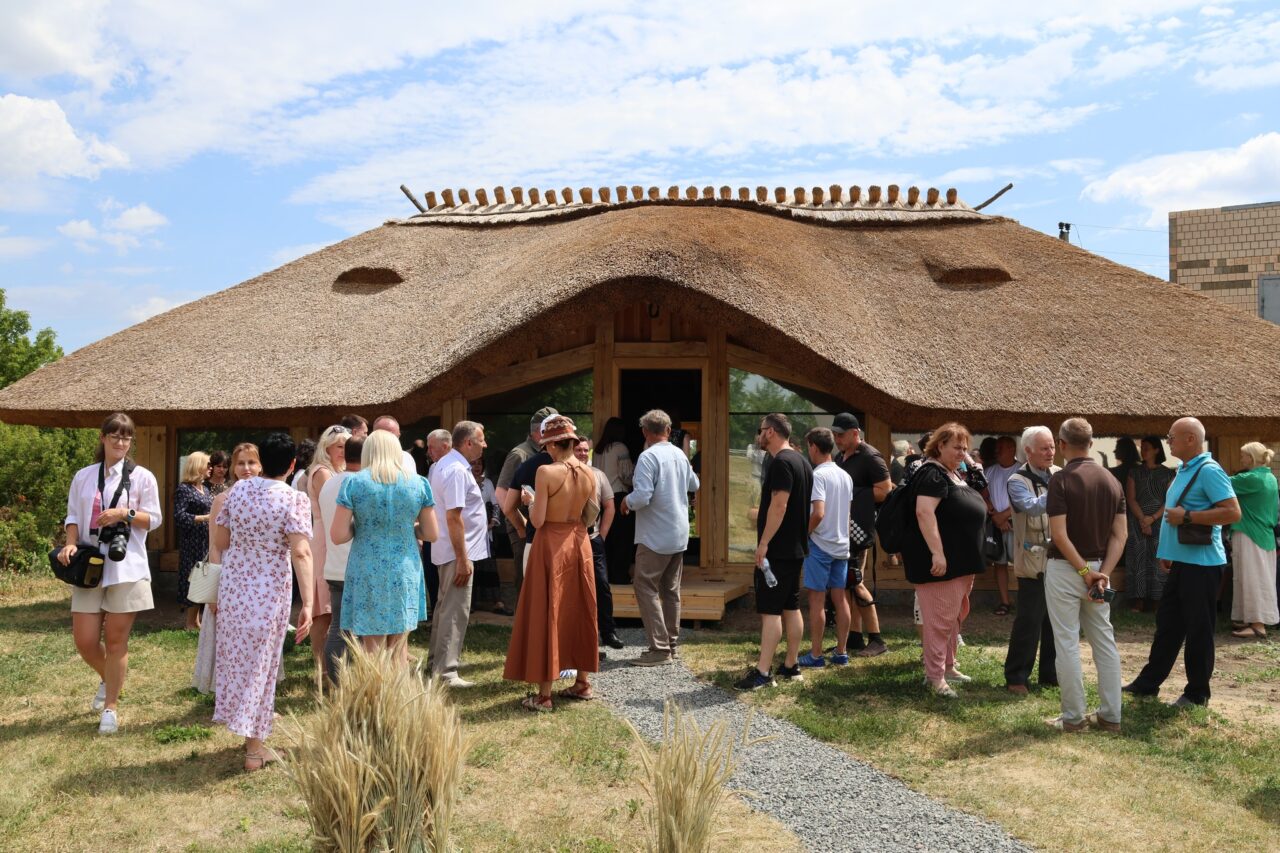
In the quiet village of Legedzyne, nestled in the Cherkasy region of central Ukraine, a new window into the ancient world has just opened. The State Historical and Cultural Reserve “Trypillia Culture” has unveiled a striking new exhibition pavilion—one that brings visitors face-to-face with 6,000-year-old pottery kilns, among the oldest multichannel ceramic furnaces ever discovered.
Set under a thatched roof and designed in the architectural spirit of the Trypillia civilization, the pavilion houses authentic, preserved remnants of two massive above-ground kilns dating back to the early 4th millennium BCE. These kilns were unearthed during excavations of the Talianky megasettlement, one of the largest and most enigmatic urban centers of prehistoric Europe.
The scale and complexity of the kilns reveal much about the sophistication of the Trypillia people—known for their mass production of ceramics, intricate ornaments, and ritual figurines. The technology on display here highlights the advanced craftsmanship and social organization of a society that thrived long before the pyramids of Egypt were built.
Beyond its archaeological value, the pavilion is a cultural statement. Community leaders in Talianka describe it as a vital step in preserving and celebrating Ukraine’s deep-rooted history. It’s also positioned as a new tourism and research destination, inviting curious travelers and scholars to explore a civilization that shaped Europe’s prehistoric landscape.
The opening ceremony was attended by Ukraine’s third President, Viktor Yushchenko, a vocal supporter of Trypillia heritage and archaeological research. Guests had the rare opportunity to tour nearby active excavation sites and witness firsthand the unfolding story of a culture that continues to surprise the world.